
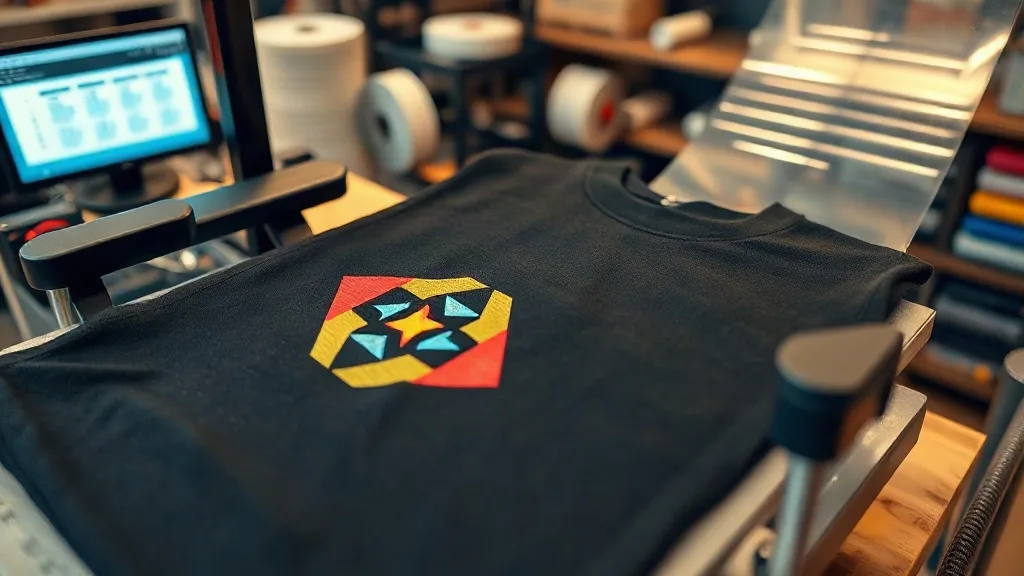
If you've ever pulled a freshly printed shaka wear tee off the press and noticed the ink sitting a little differently than on a standard 5.3 oz blank, you're not imagining it. Shaka Wear blanks are built heavy, often 6.5 oz and up, with a tight knit and a smooth face that feels premium in hand. That weight and density are exactly why they're a favorite for streetwear and workwear looks, but they also demand a few adjustments to your DTF workflow if you want prints that stay put wash after wash.
This guide isn't about whether Shaka Wear is a good blank. You already know it is. It's about the small, practical moves that separate a print that cracks after five washes from one that still looks sharp after fifty. We'll cover fabric prep, ink laydown, curing, and the mistakes that tend to show up specifically on heavyweight cotton.
Why Heavyweight Blanks Behave Differently with DTF
Shaka Wear tees are typically 100% cotton, ring-spun, and carded to a dense surface. That density is great for opacity and structure, but it also means the fabric doesn't absorb moisture or heat the same way a lighter, looser knit does. When you press a DTF transfer onto a heavyweight blank, the adhesive powder has to bond with a surface that's less porous and often slightly more resistant to heat penetration.
In practice, this shows up in three ways:
- Slower heat transfer: The thicker fabric acts as a heat sink, so the platen and the garment take longer to reach a stable temperature.
- Less mechanical grip: A tight knit gives the adhesive less fiber to grab onto, so prep and pressure become critical.
- More pronounced edges: Heavyweight cotton tends to show the outline of the transfer film more readily if the ink isn't fully embedded.
None of these are dealbreakers. They're just variables you need to control. Once you dial in your settings, Shaka Wear blanks can actually be more forgiving than flimsier tees because they don't distort as easily under pressure.
Preparing Shaka Wear Blanks for DTF
The single biggest cause of poor adhesion on heavyweight tees is skipping or rushing the pre-press. Shaka Wear blanks often arrive with a mill finish that includes optical brighteners and softeners. These are great for hand feel but terrible for adhesive bonding.
Pre-treat or not?
For 100% cotton Shaka Wear blanks, a chemical pre-treat is usually unnecessary. The fabric is absorbent enough that a good heat press cycle will do the job. However, if you're working with a blend or a very tightly knit style, a light pre-treat can improve ink reception. Test on a scrap piece first, because over-applying pre-treat on a heavy tee can leave a stiff hand-feel that defeats the purpose of using a premium blank.
The pre-press cycle
Set your press to 330°F (165°C) and pre-press the garment for 5 to 7 seconds with medium pressure. This does two things: it drives out residual moisture from storage and it smooths the surface so the transfer makes full contact. Don't skip this step, especially if your shop is humid. Moisture trapped under the transfer is a leading cause of bubbling and premature peeling.
If you're using a DTF Gangsheet Builder to lay out multiple designs, pre-pressing each garment before applying the gangsheet saves you from re-pressing later and risking uneven adhesion.
Setting Up Your Press for Heavyweight Cotton
Your standard DTF settings might work on a 4.5 oz tee, but Shaka Wear blanks need a little more persuasion. Here's a starting point that works for most 6.5 oz and heavier styles:
- Temperature: 320°F to 330°F (160°C to 165°C). Stay at the lower end if your press runs hot.
- Pressure: Medium to firm. You want the press to close with resistance but not require you to lean on it.
- Press time: 12 to 15 seconds for the transfer, plus a 5-second peel.
- Peel: Hot peel for most DTF films, but check your film's spec. Some films prefer a warm peel.
The key is to avoid two extremes: too little pressure leaves the ink sitting on top of the fabric, and too much pressure flattens the knit and causes the print to look shiny or cracked. On a heavyweight blank, medium-firm pressure is usually the sweet spot because the fabric itself provides some resistance.
Using a heat gun vs. a press
You might be tempted to use a heat gun for small runs or touch-ups. On Shaka Wear blanks, that's risky. A heat gun applies uneven heat, and on a dense cotton surface, uneven heat means uneven adhesion. If you must use a heat gun, keep it moving and use an infrared thermometer to monitor surface temperature. But for production work, a press is non-negotiable.
Ink Coverage and Color on Heavyweight Blanks
Shaka Wear offers a range of colors, from brights to deep blacks. On lighter colors, DTF inks pop with minimal effort. On dark colors, especially black and navy, you need a white underbase that's opaque enough to prevent the shirt color from muddying the design.
Most DTF films come with a white layer already built in, but the quality of that white layer varies. If you're printing on a DTF Gangsheet Builder, you can control the white ink density in your layout. For dark Shaka Wear blanks, increase the white layer by 10-15% to ensure solid coverage. This is especially important for fine details and small text, which can disappear if the white is too thin.
Another consideration: heavyweight cotton has a slight texture. If your design has large areas of solid color, that texture can show through as a faint grain. Using a higher white layer and a slightly longer press time helps the ink flow into the fabric valleys, creating a smoother finish.
Curing DTF Prints on Shaka Wear
Curing is where many printers get lazy. A DTF print that isn't fully cured will crack, fade, or peel after a few washes, no matter how good the initial press looked. On Shaka Wear blanks, the dense fabric holds heat longer, so you might need to adjust your curing routine.
After the transfer is applied, do a post-press for 5 to 10 seconds at the same temperature. This ensures the adhesive is fully activated and the ink film is set. If you're using a conveyor dryer, run the garment through at a speed that keeps it in the heat chamber for at least 60 seconds. The surface temperature should reach 300°F to 320°F. Use a heat gun or infrared thermometer to check, but don't rely on the dryer's display alone.
One more thing: let the garment cool completely before folding or stacking. Stacking hot prints can cause the ink to stick to itself or to other shirts, ruining the finish.
Common Pitfalls and How to Avoid Them
Even experienced printers run into issues with heavyweight blanks. Here are the ones we see most often, and the fixes:
- Print peeling at the edges: Usually caused by insufficient pressure or a worn platen pad. Check your press and replace the pad if it's compressed.
- Cracking along the collar or seams: This happens when the transfer is applied over an uneven surface. Use a pressing pillow or a smaller platen for those areas.
- Shiny or glossy finish: Too much pressure or too high a temperature can cause the ink to gloss over. Reduce pressure slightly and check your temp with an external thermometer.
- Color fading after wash: Incomplete curing. Extend your post-press time or check your dryer's actual temperature.
Shaka Wear blanks are durable, but they can't compensate for a rushed process. A few extra seconds at each stage makes a noticeable difference in the final product.
Frequently Asked Questions
Do I need to pre-treat Shaka Wear blanks for DTF printing?
For 100% cotton Shaka Wear tees, pre-treating is generally not required. The fabric is absorbent enough for the adhesive to bond with proper heat and pressure. However, if you're using a blend or a very tightly knit style, a light pre-treat can help. Always test on a scrap first.
What temperature should I use for DTF on heavyweight cotton?
Start at 320°F to 330°F (160°C to 165°C) with medium to firm pressure for 12 to 15 seconds. Heavyweight fabrics act as a heat sink, so you may need to add a few seconds to ensure the adhesive fully activates. Use an infrared thermometer to verify the actual surface temperature.
Can I use a heat gun to cure DTF prints on Shaka Wear?
It's not recommended for production. Heat guns apply uneven heat, which can lead to poor adhesion and inconsistent results. A heat press provides uniform temperature and pressure, which is essential for durable prints on dense fabrics.
How do I prevent DTF prints from cracking on Shaka Wear tees?
Ensure proper pre-press to remove moisture, use adequate pressure, and fully cure the print with a post-press. Also, avoid stretching the garment when applying the transfer. Cracking often stems from incomplete curing or insufficient pressure during application.
What's the best way to wash a Shaka Wear tee with DTF prints?
Turn the garment inside out and machine wash cold. Avoid fabric softeners and bleach. Tumble dry low or hang dry. Following these care instructions will help the print last longer, but the key to durability is a properly applied and cured print from the start.